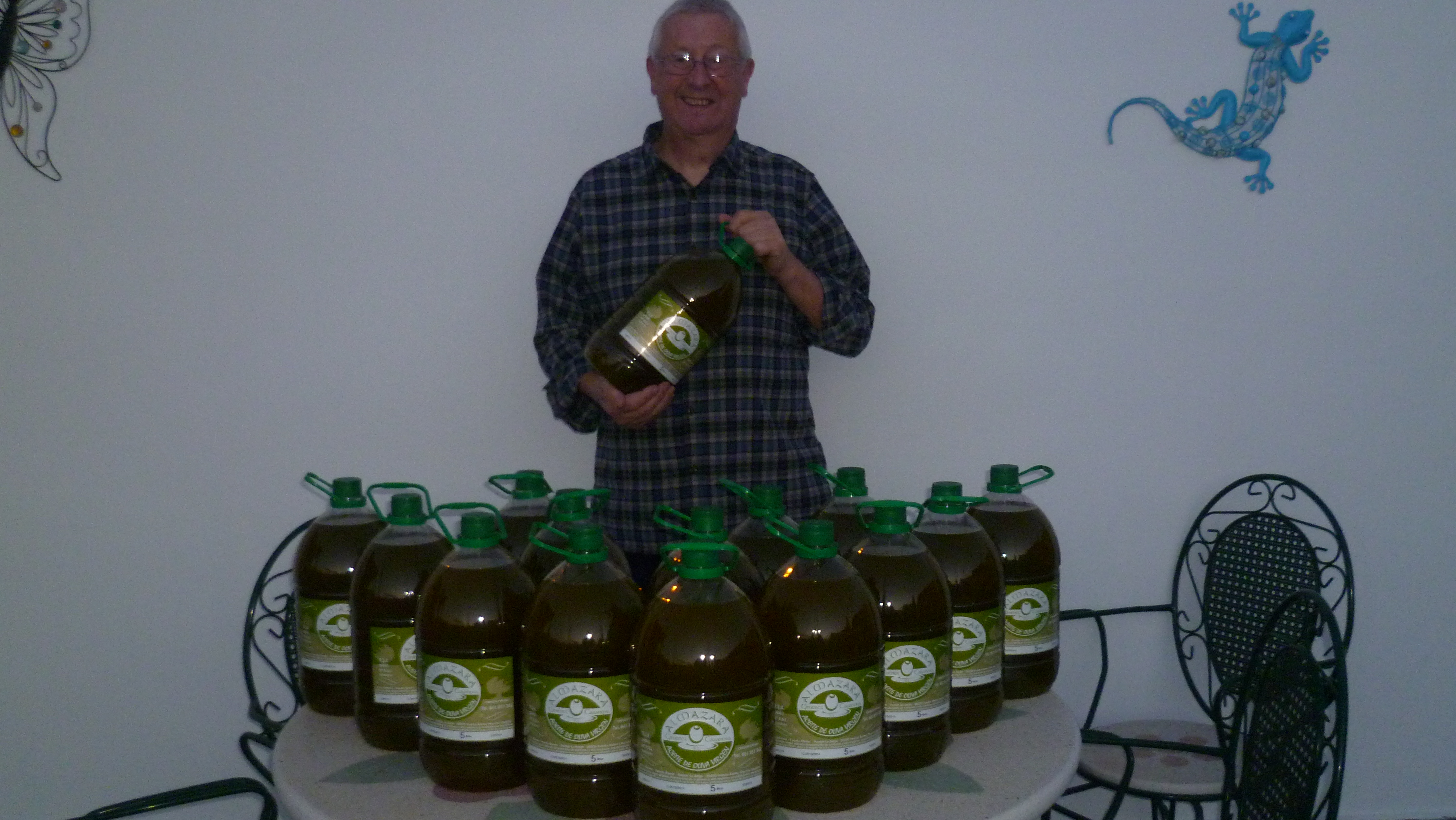

Following on from our Olive Harvest this year, it was interesting to note that some leading Olive Oil Brands are being investigated over claims that they have been labelling cheap alternatives as Virgin or Extra Virgin Oil. These include big names such as Primadonna (packaged for Lidl) and Bertoli (sold everywhere). This has naturally raised fears that products on our supermarket shelves are either fake or wrongly labelled.
Extra Virgin oil has to be the first press of the harvest, as ours certainly is. There are rules about production which would make the process time consuming and expensive, hence the temptation to cheat. The claims are disputed on the basis that professional tasters used in the tests could not tell the difference. Their own tests showed otherwise. Really!
Some years ago a Sunday times article (which I kept from early 2012) about Italian olive oil was a real eye opener. They (Italy) grow about 300,000 tonnes of of oil a year but they export 400,000 tonnes annually. They personally consume 600,000 tonnes so do the maths. 700,000 tonnes cannot come from Italy. Mostly it comes from Spain (not ours, sadly) which, according to the article, is of superb quality. They are also alleged to import from Tunisia to re-export as their own. The only thing Italian about it is the bottle.
Olives are pressed by mechanical means as laid down in European Law. For it to be “Extra Virgin”, there are stringent commercial conditions including examination by a taste panel. There are many other conditions which I will not bore you with but olive oil sold as Extra Virgin can cost up to £10 a litre, or more. Many of the olives used could be windfall (we do not collect those) and sometimes oil is pressed from the residue left over after first pressing. This is then “deoderised” to hide nasty smells. In America, fancy bottles with posh sounding (fictitious) Italian names even use canola oil coloured with industrial chlorophyll. One expert was allegedly heard to say “What has this got to do with Virginity? This is a whore!”
So be warned. Don’t spend a fortune on a fancy bottle of Olive Oil. Be a friend of ours and if you come to Spain, we may give you a free bottle.


 In the end, our average yield was 14% from 20 trees, yielding 350 kilograms of olives producing 50 litres of oil. We still have over 40 litres unused from 2014 so now we have a very large stock. We would like to take most of it to the UK but it will have to wait until we move back.
 Frank's Blog